Specific Model Information
Now that you have all the info you need to make a choice, it’s time to pick out your own personal knee walker. If you are in the Houston area, then Bayshoremedicalsupply.net is the place to go. They have a huge selection of all kinds of medical equipment including top of the line knee walkers that have all the features mentioned above. These models include:
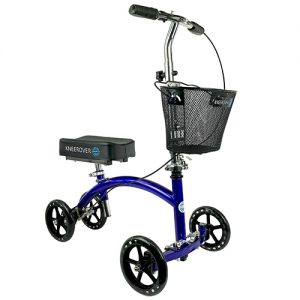 The KneeRover Deluxe– A top of the line design, 4-wheel model that has extra padding for your knee, a large transport basket and tie-rod steering for maximum stability and safety.
- Offer an advanced automotive style tie-rod steering mechanism and an adjustable locking handbrake.
- Features four 7.5″ non-marking rubber wheels, a comfortable 3″ thick contoured knee platform that is left or right leg compatible, and a free basket.
- Has a removable front axle and handlebars with a quick folding mechanism for easy transport and storage.
- Fully adjustable handlebars and knee platform,
- 300 lb weight capacity and is recommended for individuals with heights 4.9′ – 6’6″.
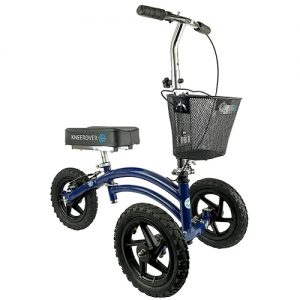 The All-Terrain KneeRover– This kneerover is a steerable knee scooter in the industry, establishing a new level of durability and freedom of mobility for individuals who cannot bear weight on their foot or ankle, yet want to remain active.
- This indoor/outdoor all terrain knee scooter features 12-inch pneumatic tires
- This steerable knee walker offers an advanced automotive style tie-rod steering mechanism (not available on most knee walkers) and an adjustable locking handbrake.
- Fully adjustable knee platform and handlebars with easy folding mechanism for simple transport and storage of rolling knee walker.
- 350 lb weight capacity and is recommended for individuals with heights 5’6″ – 6’5″.
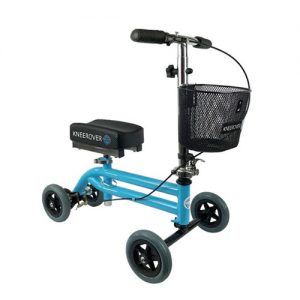 The KneeRover Jr.- A high quality kneerover made just for kids and smaller adults.
- The first pediatric steerable knee scooter designed specifically for kids and smaller adults who cannot bear weight on their foot or ankle yet want to remain active and mobile.
- Excellent stability and safety with its sturdy dual bar design, unique 4-wheel frame, adjustable handbrake and rear drum brake.
- Weighs only 18 pounds,
- 3″ thick contoured knee platform and ergonomic rubber hand grips for complete comfort.
- Easy to use thumb-release lever. Additionally, this knee walker is equipped with a free detachable storage basket and features tool-free assembly & setup.
- Lightweight yet sturdy knee walker offers a 160 lb weight capacity and is recommended for children and small adults with heights 3’9″ to 5’6″.
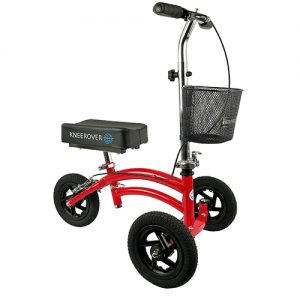 The KneeRover Jr. All Terrain– You guessed it, just like the kneerover jr. model but with larger tires designed to allow users to get around just about anywhere.
- Outdoor mobility for individuals (4’3″ feet to 5’9” tall) who cannot bear weight on their foot or ankle yet want to remain active and mobile.
- An advanced automotive style tie-rod steering mechanism and an adjustable locking handbrake.
- Includes the New KneeRover® Stabilizer training wheel for maximum stability and control.
- Features three 9″ diameter air-filled tires and a 3″ padded knee platform that is left or right leg compatible.
- Features tool-free setup and assembly, along with a hand rim brake.
- Equipped with an easy folding mechanism that collapses via a thumb-release lever.
- It also comes with a FREE detachable basket for storage of your personal belongings.
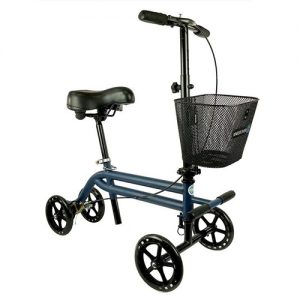 The Seated KneeRover– This model lets you truly sit down and elevate the injured leg for maximum comfort.
- Adjustable locking handbrake and rear drum brake.
- Seated mobility scooter features a large gel padded seat,
- Ergonomic rubber hand grips
- Front leg platform that allows the patient to rest in comfort while elevating the non-weight bearing leg.
- Handlebars with a quick folding mechanism for easy transport and storage.
- Walker also comes with four 7.5″ non-marking rubber wheels, and a free basket.
- Robust 300 lb weight capacity and is recommended for individuals with heights 5″ – 6’6″.